Showing posts with label Video Games. Show all posts

Thursday, August 15, 2013

Honorary gnomes

All this WoW blogging has brought some traffic back to the site. Maybe I should just turn this into a WoW blog. (Won't happen, but I've had worse ideas.)

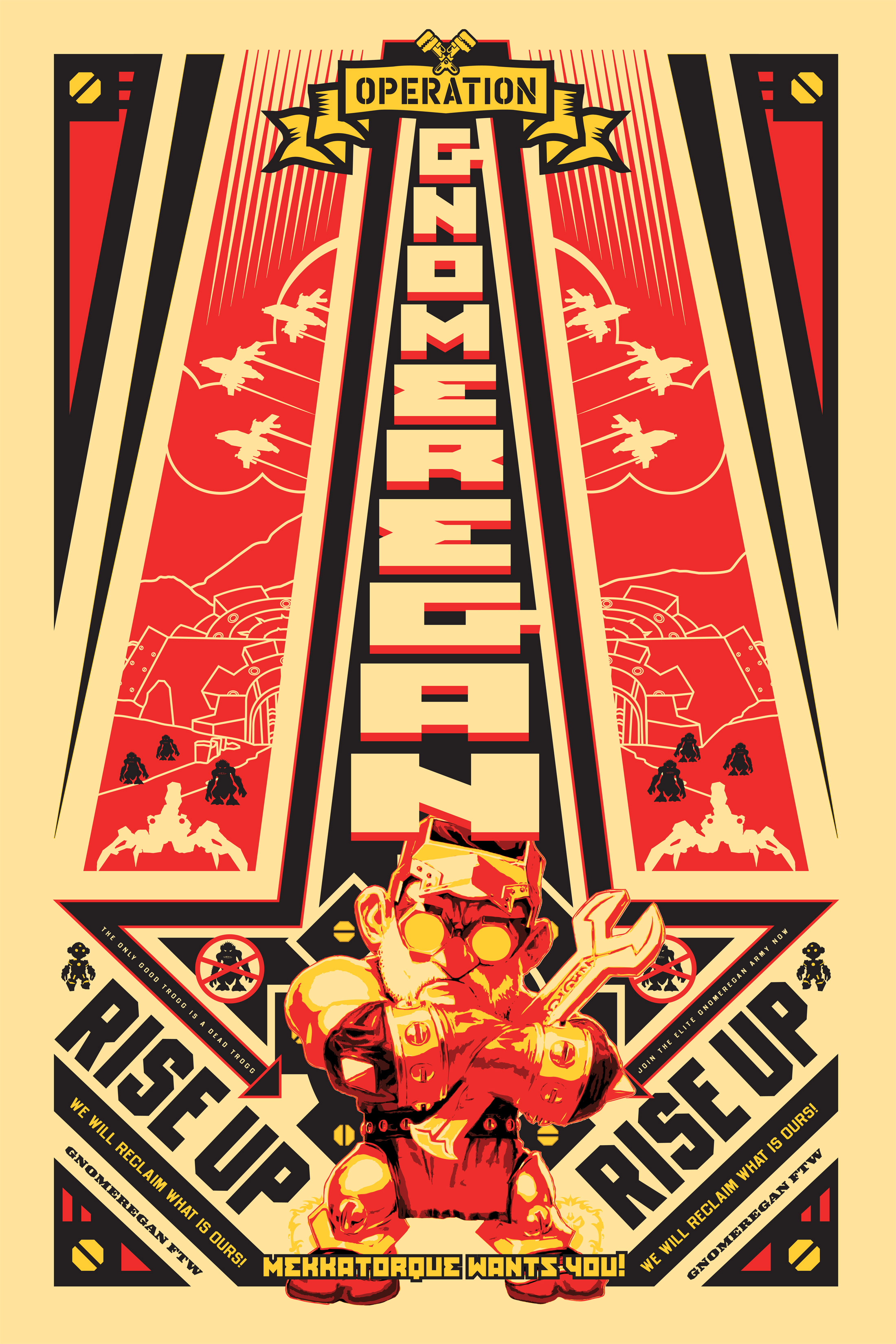
One of the traffic sources was from the Gnomeregan Forever guild website, apparently impressed with my post on Operation: Gnomeregan and an offer to make me an honorary gnome.

My favorite character is and will always be my draenei paladin, but I actually do play gnomes. Well, sort of.

Hassium, Warlock Supreme Totally not a warlock, and I have no idea why that demon is following me around.
Halanium, Warrior of Gnomeregan and part-time gardening enthusiast
The above screenshots are both of my gnomish characters. Hassium made it to level 80 in Wrath, but didn't get played in Cataclysm. I was volunteered as raid leader not too far into Cataclysm, so there wasn't really time to level a bunch of alts. It doesn't hurt that it was taking me a while to adjust to the changes Warlocks received in Cataclysm. I also had been wanting to try out a Warrior for quite some time.

That's when Halanium appeared on the scene. My plan had been to level him as a tank in the dungeon finder, as my main was a Paladin tank and I wanted to see how the differences between the two classes played out. Then I remembered that I hadn't really explored any of the changes to the questing experience after Cataclysm was released, so Halanium went out into the world to kick butt in the name of Gnomeregan.

Oddly enough, all this talk of gnomes convinced me to play Halanium again. He'd gotten to level 85, but I've been well occupied in Mists with my Paladin.  (Okay, and a druid healer.) I have no idea how long that'll keep up, but it's been fun getting back into another character.

Monday, August 12, 2013

Community Blog Topic: Adding fourth specs to WoW

You'd think this was turning into a WoW blog, but it really isn't. I have all kinds of other things to write about. For example . . . um . . .

Hey look, another WoW blog topic!
With 11 classes, 34 total specializations, and 13 different races, you have plenty of options for the game. A few more couldn't hurt . . . right?
If you aren't familiar with the class specializations in WoW, let's start at the beginning.

WoW has always had three specializations (specs) for the classes.  These would allow you to distinguish your character from others of the same class, as well as offering different gameplay.  This could be minor, such as the difference between two different DPS specs, or it could be major, such as the difference between a tanking and a healing spec.

A few classes have bucked the three-spec rule at various times.  Death Knights started out in Wrath of the Lich King where each of the three specs could be a tank or a DPS spec.  Blizzard eventually removed this capability, making one spec exclusively a tank spec, while the other two stayed DPS.  Druids always had three specs, but the original melee spec, Feral, supported two druid playstyles and shapeshift forms.  Cat form was the druid melee DPS, while bear form was the druid tank.  Although each spec had its own talent tree, most of the abilities in the druid talent tree had caveats in the form of, "If you are in Bear form, X; if you are in Cat form, Y."  Eventually, Blizzard simplified this by making each a separate spec, resulting in druids being the only class in WoW to have four specs.

The question of how to add a fourth spec to the other classes has been a popular topic of speculation since that change.  I certainly wouldn't mind it being done, although it's not like we lack for options in the game as is.   Where I'll disagree with others when this topic is broached is in the right way to make it happen.  As I see it, there are a few principles to consider in any proposed changes to the classes:
  1. Does it fit with the lore/theme/flavor of the class?
  2. Does it require changing the mechanics of the class?
  3. Does it require changes to any other game features?
  4. Does it fill a niche, or conflict with existing archetypes?
  5. Is it intuitive to new and/or existing players?
To my mind, most of the ideas floated for new specs clash with at least one of the questions above. Some simply don't fit thematically, either in WoW or with classic fantasy tropes. Others would mandate adding a lot of new abilities to the classes, to the point that the classes might not be recognizable for it. Asking for certain pieces of gear to have more demand is fine, but generating unheard of themes for the classes is the wrong solution.

I won't say some of these ideas would never be introduced, or that it would be impossible to change the game to make these things possible, but their implementation would be significantly more complicated than many people realize.

All the same, some of these ideas aren't without merit. I'd like to address most of the most popular suggestions for new class specs. You might want to get comfy.

Wednesday, July 31, 2013

Community Blog Topic: The re-retaking of Gnomeregan

I still have a lot I want to say about my D&D campaign, but that series has settled comfortably on the back-burner for now. I've decided it's going to be easier to write about it after it's actually finished, and we'll (hopefully) cross the finish line in September. In the meantime, another communal topic has captured my attention.

The various factions and peoples of Warcraft have had some very interesting and well-told stories. However, some groups are more prominent than others. For example, the orcs and trolls are currently in the midst of a civil war, the completion of which will be the dominant story for the conclusion of the current expansion. Other factions have faded into the background, with little said about their activities for quite some time, at least in-game. The draenei are a frequent example, who practically vanished after the Burning Crusade completed, as are the goblins, who landed on the shores of Orgrimmar only to have their faction leaders vanish into thin air. Players want to see these stories continue, particularly if they play one of these characters and have a vested interest in the outcome.

As for me, I feel there is one race that has received the short end of the stick more than any other. For this faction, Blizzard has truly given their story short-shrift. This short-coming is epitomized in the only real attention they've received, in-game, in the entirety of the game's lifespan so far.
Operation: Gnomeregan - An absolutely wasted opportunity of storytelling on Blizzard's part.

(See the rest below the fold)

Wednesday, July 10, 2013

Community Blog Topic: Is leveling (in WoW) too easy?

Once again, I'm taking up a topic introduced elsewhere.  You're welcome to read the background that prompted this question.  As I said last time, I don't write about WoW much,

Starting a character is World of Warcraft really isn't difficult.  The game holds your hand through a lot of the earliest moments of the game, and that's understandable.  Bringing in new players (i.e. customers) means having a low barrier to entry.  Leveling a character isn't restricted to the starting zones (which serve the role of a tutorial level.)  Eventually you're sent into the wider world for ~70 levels of fun and adventure.
The hardest part is making a decision.
Is leveling too easy?  I think answering this question properly requires breaking down the question into three related questions:

  1. Is leveling easy?
  2. Is leveling fun?
  3. Does leveling prepare you for the end game?

See the rest below the jump

Monday, May 27, 2013

Community Blog Topic: What is wrong with WoW?

I don't think I've written about playing World of Warcraft on this blog more than once, but I'm always willing to give topics their due.  Over at WoW Insider, this week's community blog topic is about the players' complaints about the game.
Sit back, m'boy.  This is gonna take a while.
So, what is wrong with WoW?  Given the amount of time I put into the game, you wouldn't think I'd have much of anything to complain about.  Truth be told, a lot of the complaints about the game tend to be more about rose-tinted nostalgia, looking back at the game when players first fell in love with it.  Sometimes it's best to keep a project out of the hands of those who love it the most.

For my criticism of WoW to make the most sense, first I need to talk about what there is to do in WoW.  (On a side-note, none of this applies to PvP.  That game really doesn't change too dramatically.)
See the rest below the jump.

Monday, January 17, 2011

Non-Combat Gameplay

First things first:  If you think video games can be more than just mindless entertainment, and actually enjoy considering their potential and meaning, then you should be watching Extra Credits over at The Escapist.

That said, their most recent video was about non-combat gameplay.  In short:  A great majority of video games are mostly played through combat, and while this is both entertaining and a cheap way of introducing tension and drama, it neglects the many other aspects of life that video games could entertainingly portray in order to tell a good story.

Why is this so?  I imagine it's the same reason sex, by which I mean scantily clad females, is so ubiquitous in video games.  A great deal of both the creators and the players are male; while this has balanced somewhat in the last decade or so, men seem to be the dominant force in the industry.  And let's face it:  Men like violence.  I don't mean this in any sort of denigrating way, it's just the sort of fantasy which we enjoy.  Let's save psychology and philosophizing about why that is for another time.

Could you make a game that is entertaining which doesn't involve combat?  I've no doubt.  But I think the thing that will ultimately make that sort of game successful is a good story, not good mechanics.

The problem is that unless you have programming good enough to respond to a wide variety of player inputs, these sorts of games will probably be a long series of if/then statements.  If player does X, computer responds with Y.  Which is fine, and I'm sure it can be more complicated than that, but it will eventually boil down to predictable management of minutiae, which is going to be problematic for this sort of gameplay.

The entire idea is that you're offering a different way of overcoming obstacles in these games.  Not combat, basically.  If you don't replace the elements that make combat a cheap dramatic resource (tension, risk, the unknown possibilities), then the gameplay becomes formulaic.

Which is not the kiss of death for game, as I said; it's just that the impetus is then on making a good story.  I loved the Phoenix Wright games, and I think they're an excellent example of this sort of thing.  But I'm skeptical we'll ever see a game that fully replaces combat with philosophical debate, pushing the cloak and sheathing the dagger.

Thursday, January 06, 2011

The Unlockables

I picked up the new Goldeneye: 007 game for the Wii over Christmas. This is a classic game for me, one I spent many hours with in high school, whiling away afternoons with friends. In fact, I never played the single player game when this was on the N64, so finding out that Nintendo was remaking the game inspired a lot of nostalgia for the days of sitting on the couch and blowing my friends up.

So you know what happened when I picked up the game with some friends on New Year's Eve? I found out that half the features I wanted had to be unlocked, including the proximity mines (AKA the greatest video game weapons ever). There was much nerd rage to be had.

Seriously, why do game designers do this? What possible reason could there be to make players spend hours and hours playing one game mode to unlock features in another? I'd say it's to get people to play the game for longer, but it's not like designers get paid by the hours people play the game. It reeks of artificial padding.

I can think of worse examples, of course. Wario Ware on the Wii required you to beat the single player game before you could even access multiplayer. I've played DDR games where you had to progressively unlock each difficulty level for a song. Smash Brothers is defined by all of the unlockable features, which is pretty obnoxious if you bought it to play with friends. It's pretty disheartening when you crack open a game, anticipating a heavily advertised feature, only to find that you have to play the game endlessly before you can access it.

Consider this a negative review of Goldeneye for the Wii. The one feature I was looking forward to, proximity mines, is only unlocked through online play. How? Why, by earning experience and gaining levels through good performance. Oh, and what level do you unlock proximity mines? Level 53. Yeah, whoever made that decision can go suck an egg.

Edit: Forgot to add probably the most important point: This sort of gameplay has a limited shelf life. That is, the online community with which to play the game is only going to be around for so long. What happens when that well dries up? Will that content be forever locked away?

Saturday, January 01, 2011

TRON: Legacy

As part of my resolutions for the year, I'm attempting to post more frequently on the blog.  While a Monday-Friday schedule might be more conducive for traffic, I may as well start the year off right.

You might recall (by scrolling down the page) that I wrote about a little game called TRON 2.0 back in August.  This was partly as preparation for the upcoming film, TRON:  Legacy.  Well, I saw said sequel over my Christmas holiday. (For what it's worth, none of the content of TRON 2.0 is referenced by the movie.)

Overall, I liked it.  I think this is partially because of my fondness for the concepts and atmosphere of the series.  The film isn't breaking any new ground, story-wise.  In fact, I'd argue that most of it is simply recycled from the first film.  So, light on plot, heavy on spectacle; exactly the reasons I disliked Avatar.  I'm still not sure what to make of that, except to say that Legacy seemed to at least attempt to tell a new story, albeit one with very familiar elements.  

The film really is stunning, though.  I didn't see it in 3D*, but I'm told it's makes good use of the technology.  As with the original, the film does a lot with a little, making very attractive settings through the use of geometrically simple structures and monochromatic designs.  The music is a fantastic companion to the visuals as well; I liked Daft Punk before, but they truly outdid themselves for this film.

Should you see it?  If you're a fan of the original, then you won't want to miss this.  If you like sci-fi action films, then this is worth your time. If you're into the spectacle of films, and loved Avatar because of how pretty it was, then you'll probably enjoy this as well.  Everyone else . . . your mileage may vary. 

You might also be interested in this review of the movie, courtesy of Movie Bob, over at The Escapist. 
* - I really, really hate the surge of 3D films coming out in the last 5 or so years.  I find it to be mostly a gimmick, as well as an excuse to sell $15 tickets.  After all, if you're having trouble putting butts in seats, why not reverse that trend with double-price tickets and a technology that isn't easily replicated at home? 

But mostly, it's because I wear glasses.  Those 3D glasses you have to wear are a massive pain to wear for the course of a movie, and eventually those movies end up making me vaguely motion sick.  Stupid 3D movies.

Saturday, August 28, 2010

TRON

If you've seen any movies this summer, then you've likely seen at least one preview for the upcoming TRON:  Legacy.  The original TRON was released early in my life, so I can't say exactly how the visuals compared to other movies at the time.  Still, the previews for the sequel look very attractive with today's level of CG animation.

To prepare for the new movie, I rented the original a few weeks ago.  It wasn't nearly as good as I remembered it, though its problems weren't much different than any other 80s movie, Sci-Fi or otherwise.  Still, the movie has maintained a following for almost 30 years, so it did something right.

The jaunt to the past inspired me to partake in another TRON franchise, mostly to see if it gets utilized for the upcoming LegacyTRON 2.0. (Why yes, I am about to talk about a video game well after it was relevant.  How did you know?)

Continue below the fold

Saturday, March 06, 2010

You're not qualified to have fun

I haven't written about it much here, but back in 2008 I started playing World of Warcraft.  I always wondered why people found such games so addicting, but, well, now I know.  I haven't written much about it because it's kind of a specialized interest; it's easy enough to write a single review of a game, or even a short series, but WoW is one of those games that can take up a lot of attention.  People even have full-time jobs just writing about it!

Recently in game, I applied to a new guild.  For those who don't know, players band together in groups called guilds to facilitate higher level play.  Often, the "endgame" content requires 10-25 players to accomplish, so being a part of a guild not only provides a (semi)stable structure for doing so, but also offers a stronger sense of community than you get otherwise.  In many ways, it's almost required to be a part of a guild in order to see that endgame content.  You can just group together with strangers (pick-up groups, or "pugs"), but often times this can be very stressful; expectations are very high, and there's very little patience or tolerance of mistakes.  Sometimes it's akin to demanding a PhD for a burger flipping job.

I recently applied to join a guild on my server.  If you think it sounds funny to say that I applied, as if it were an actual job, then you're not alone.  I was rejected, and my reaction was worth pondering for a moment.

Some people take this game very seriously.  There are people who play many, many hours a day and are highly competitive about completing "world first" achievements.  Even though some guilds will never play on that level, they are very serious about completing the same content.  As such, their standards can be exceedingly high.  They won't take someone into an instance who hasn't been there before (which leads many players into a Catch-22 scenario).  The wide variety ways that you can customize your character become irrelevant, as suddenly there are "right" choices and "wrong" choices.  There are people who will tell you that you're a substandard player based on, say, a 1% difference in health pool, or a 2% difference in damage.  The fervent belief in such things can be almost religious.

It's an odd thing, being rejected for what is, at its heart, a hobby.  I mean, it might make some sense for an intramural sports team, for example (although people would understandably be upset about perpetually riding the pine), but this is a video game.  I can't imagine someone saying, "No, you're not good enough at Donkey Kong, you can't play with me.  You'll drag down the entire game."

There's certainly something to be said about playing as well as you can.  If you're counting on nine (or 24) other people to put on their "A game," it can be frustrating that progress is blocked because someone is slacking off in one way or another.  Still, the level of elitism and hostility that arises out of a cooperative hobby is very surprising sometimes.  Perhaps it's just an extension of the GIF theory.

Saturday, October 17, 2009

Oblivion: Fast Travel

I'm starting to realize that much of my review of Oblivion involves comparing it to Morrowind.  This isn't entirely purposeless, as much of the popular reaction to the game was comparison to Morrowind, both positive and negative.

That being said, let's talk about travel as it was then, in Morrowind, and as it is "now" in Oblivion.

Continue reading below the jump

Monday, October 12, 2009

Oblivion: Factions

In this edition of my continuing series on the fourth edition in the Elder Scrolls series, I plan on talking about the various groups your character can align himself with.  This post should be a refreshing change, given that I started this series with the intention of discussing why I liked this game.  So far all I've done is . . . well, let's say I've pointed out some idiosyncracies.

So, factions in Oblivion, eh?

Continue reading below the jump

Tuesday, October 06, 2009

Oblivion Skills: Magic

In my continuing effort to put fresh material on this blog while writing absolutely nothing of significance, I'm continuing my series on Oblivion.  Keep reading below the jump to get an eyeful of information on the nature of magic in the game.

Continue reading below the jump

Sunday, October 04, 2009

Oblivion Skills: Mercantile

Hmph.  While I have a bunch of studying I ought to be doing right now . . . I'm just not feeling it.  So instead, you're getting another video game-related post. 

In our last installment, we were discussing the stranger skills of Oblivion.  This time, I'd like to discuss the very strange state of Mercantilism.  The mercantile skill allows you to get more money for the things you sell to people.  In order to truly understand this, we'll need to go back to Morrowind.

Continue reading below the jump

Oblivion Skills: Speechcraft

First things first, I want to thank Chocolate Hammer for shooting me a link.  I always appreciate it when another blogger notices me.

That being said, let's talk about some of the stranger skills in Oblivion.  In my last post on the topic, I mentioned that some of the skills are pretty difficult to level.  Speechcraft is definitely one of them, but in order to understand just how strange a skill this is in Oblivion, we need to go back to its predecessor, Morrowind.

Continue reading below the jump


Friday, October 02, 2009

Oblivion: Skills, leveling, and auto-balance

In thinking about what I would write about Oblivion and why I sunk so much time into it, I ended up deciding to do a post first about the skill system in the game.  Then I thought about Shamus, who blogs endlessly on video games, and did a quick search of his site.  Turns out he wrote my exact post quite some time ago.

So, his post is worth reading, but I'm still gonna put my version after the jump.  Heh, "after the jump."  I'm so glad Blogger finally added that feature.

Let's play a time sink

Apparently there's this thing that some video game bloggers do called "Let's play." It's a series where the blogger starts up a video game and, through a series of posts, takes his readers through the experience of playing the game (through his eyes, of course). Shamus pointed me to a "Let's play" series about The Elder Scrolls: Morrowind. He subsequently started one himself for Champions Online.

Reading through the material at Chocolate Hammer has been amusing. The author there is playing Morrowind, which is the third episode in a series of games. I played it through once while he played it through enough to know the game inside and out, but his series reminded me of the fourth episode, Oblivion. Looking back through my archives, it doesn't seem that I ever wrote about playing the game, which amazes me considering the amount of time I devoted to it.

Morrowind and Oblivion were set apart from other RPGs by being sandbox games. While most RPGs will put you in a defined role and tell you a specific story, sandbox games drop you off in a setting and let you do your thing. There's a story, to be sure, but following it is up to you, and there's plenty of other things to occupy your time if you so choose. As for your role, well, you get to decide that for yourself as well.

Of course, both of these game types have their flaws (Chocolate Hammer highlighting those in a game like Morrowind), but one of the big strengths a sandbox game has is replay value. You can play as a wizard or a warrior, valiant hero or swarthy rogue. Each time you play through, you're likely to discover something else that appeals to you. Bethesda, the makers of the game, enabled player-made modifications to the game to be relatively simple, resulting in a vast trove of material to extend the game even further.

I don't really care to start up a "Let's play" series for Oblivion; I'm still trying to figure out how to break out of my WoW addiction, so it's not like I need another time sink. Still, I might end up writing about the game at least some. Considering the hours I spent in that game, I just can't believe I didn't say a single word about it. It's a few years old at this point, but still an amazing game.

Friday, September 11, 2009

The timely review is a lie

You know how I know I'm this guy? I recently played (and finished) Portal. Finally.

I'm not sure what would be gained from offering a "review" of this game. It's old enough at this point that you either know you should play it or have already played it. Everyone else probably just doesn't care about the FPS genre or PC games in general.

Still, I haven't met my useless blather quota for 2009 yet, so I might as well write about it.

This isn't a traditional FPS (first-person shooter, for those not in the know). The only "gun" you use during the game creates portals; by firing a blue portal at one location and an orange portal at another, you can instantly move through time and space. In essence, this is a physics platform/puzzle game played in first-person. It really is as clever and fun as everyone said it was.

I finished the game in roughly 2 hours. I'll give Valve credit for polishing it to a perfect shine, but it's essentially a demo, which is why I guess it came bundled with several other games as part of the Orange Box.

The mystery put together by the rather spartan clues of story in the game left me aching for more. Gee, what an unusual change of pace from Valve! The game should be enjoyed for what it is, but I'm a sucker when it comes to a good story, and the brief, leading clues drew me in easily. What I wouldn't give for a few minutes alone with the Valve writers just to pick at their brains.

Anyhow, this game comes with my recommendation, whatever that's worth. It's cheap and easy to pick up on Steam these days, too, so give it a try if you've got a couple of hours to kill and need something fun to do.

Saturday, January 31, 2009

They all need better games

My cousin (who needs to update his freaking blog sometime) passed along this article entitled, "The Wii needs better games now."

While I don't usually trust people in the mainstream media to write about such matters, I can't disagree with the premise of the article. The Wii is suffering from a drought of good content. Sure, there's fun stuff to download on Wii Ware, but the last full game I bought was Mario Kart, and that was almost a year ago. When I go to the stores, the shelves are full, but full of what? Crappy movie or TV tie-ins, animal sims, pet sims, "girl" games, silly sport games . . . it's like a wasteland of entertainment. Nintendo's own products are considered the best, but the last thing they produced was Wii Music, a product I doubt will light the world on fire. My DS suffers from the same problem.

Still, I can't merely fault the Wii for this. Most other consoles are also under the curse of a lack of creativity. It's a field full of sport franchises, endless sequels, and remakes of games that didn't need them. Where are the games with memorable characters and good writing?

If you're a Wii owner, what have you bought in the last year that you liked, or what are you looking forward to?

Sunday, January 04, 2009

Select Difficulty

While I was home for the holidays, I had the good opportunity to fire up my old NES. Between that, and two recent discussions on video game difficulty, and I thought I had some good blog fodder.

Shamus points out in his video that a lot of "hardcore" players, or at least those of us with a modicum of skill, grew up learning to play on the old NES. We had a lifetime of scaling difficulty, both in game quality and control scheme complexity, to get to where we are, so people who are just joining the party are right to feel overwhelmed by the mess that is modern video gaming.

There's something to be said about the part pertaining to new players. There's a reason games like Bejeweled and Chuzzle are so popular. While there was a time that you would sooner admit to being a chronic bed-wetter before telling girls you played video games, these days it's really easy to convince women to play a game of Wii Sports, Mario Party, Mario Kart, Rock Band, etc.

Still, I find the former more interesting. I think there's a lot of nostalgia that goes into saying, "Video games in the NES era were perfect! We learned to game in a beautiful harmony!"

I think it's many of those older games which paved the way for today's games, which feature crushing difficulty and what Shamus likes to call "Do it again, stupid" (DIAS) syndrome. DIAS is the state where the game presents you with a challenge with little room for error. When you fail, you have to repeat the challenge over and over until you get it right. Sometimes failure sends you back to an earlier point in the game, which leads to a frustrating situation where you might have to play the same 10-20 minutes of a game over and over because of one part you can't get past.

Here's a few examples from the games I picked up this past week:
This game is considered one of the best games for the NES, even one of the best ever made. While the game is quite fun, I would argue that most people only ever beat it by "cheating" with the Warp Whistles, which no casual player would have known about. Playing the game normally takes something on the order of 6-8 hours, and there's no save function. Many of the levels contain puzzles which would be nearly impossible to solve without access to game guides. Others feature situations requiring such lightning fast reflexes and time-critical moves that only someone well-versed in the genre is going to tackle it. The point being, this is a hard game.
If you were eight years old and played this game, it was like a slap in the face. I'll post this link, with a warning for foul language. You controlled the turtles one at a time, going through levels to rescue Splinter from Shredder. Sounds like fun for someone who watched the cartoon every day, right? Except the game was filled with labrynthine levels, rare health pickups or power-ups, and swarms of enemies too big to avoid and too strong to kill quickly. Since you could freely switch between the turtles, you technically had four lives. However, some of the turtles had attacks which were nearly useless. You could "rescue" a turtle who lost all his health, but figuring out where those locations are was a feat in itself. Very few people who played this game ever made it to the end, and even fewer managed to topple Shredder when it happened.
Okay, I remember this game fondly as well, but I never finished it in my youth. Once again, the complexity of some of the jumping puzzles, as well as the difficulty of the enemies, made it nearly impossible for an unskilled player. Most levels featured a robot which was difficult to avoid and stole half your health if it touched you. Some of the bosses were only within reach of most players (including me) due to a cheat involving the pause button, a feature removed in future installments of the game.

So, a lot of the older games are difficult. So what? My point is that there are games of crushing difficulty from every era. We may remember those games fondly in retrospect, but most of us put them down in frustration at one point or another. We kept up with the hobby because of the games that were within reach of our skill level. Those games can still be good today, and I think it's worth keeping in mind the things which made those games good when looking at the newer games. A game can be easy enough for new players without simplifying it too much. Sure, games like Nintendogs convinced a lot of people to buy a DS, but they can still be challenged by, and enjoy, games like Phoenix Wright.

Not that anyone's asking my opinion on game design theory. I can dream, can't I?

Oh, and no discussion of difficult video games of the past would be complete without pointing you to the Angry Video Game Nerd (again, be wary - he uses lots of foul language).